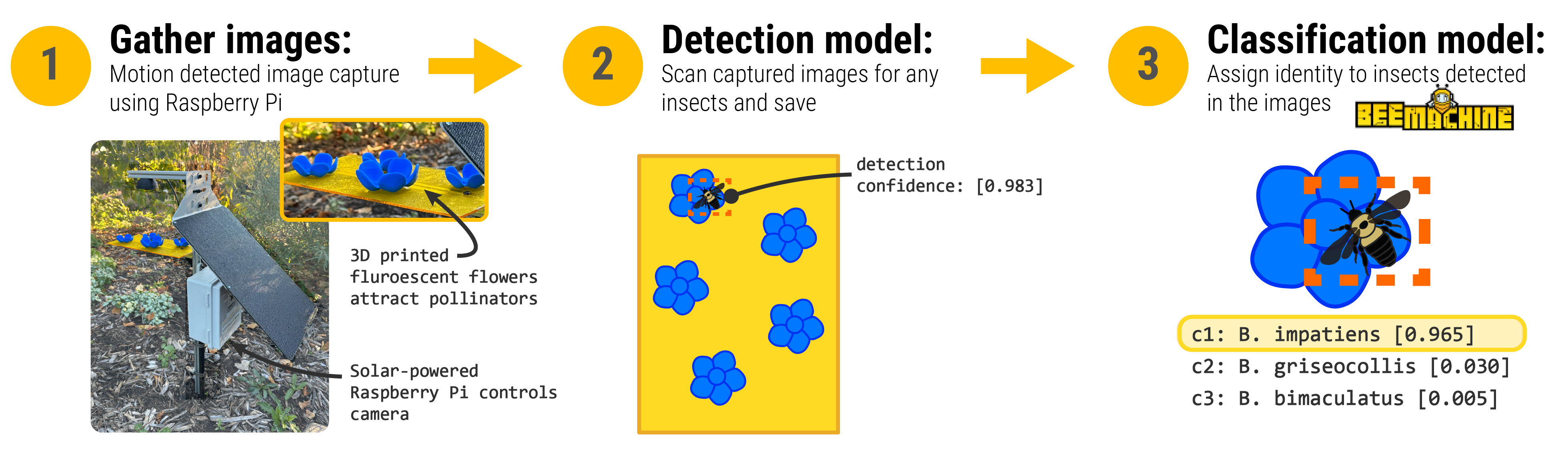
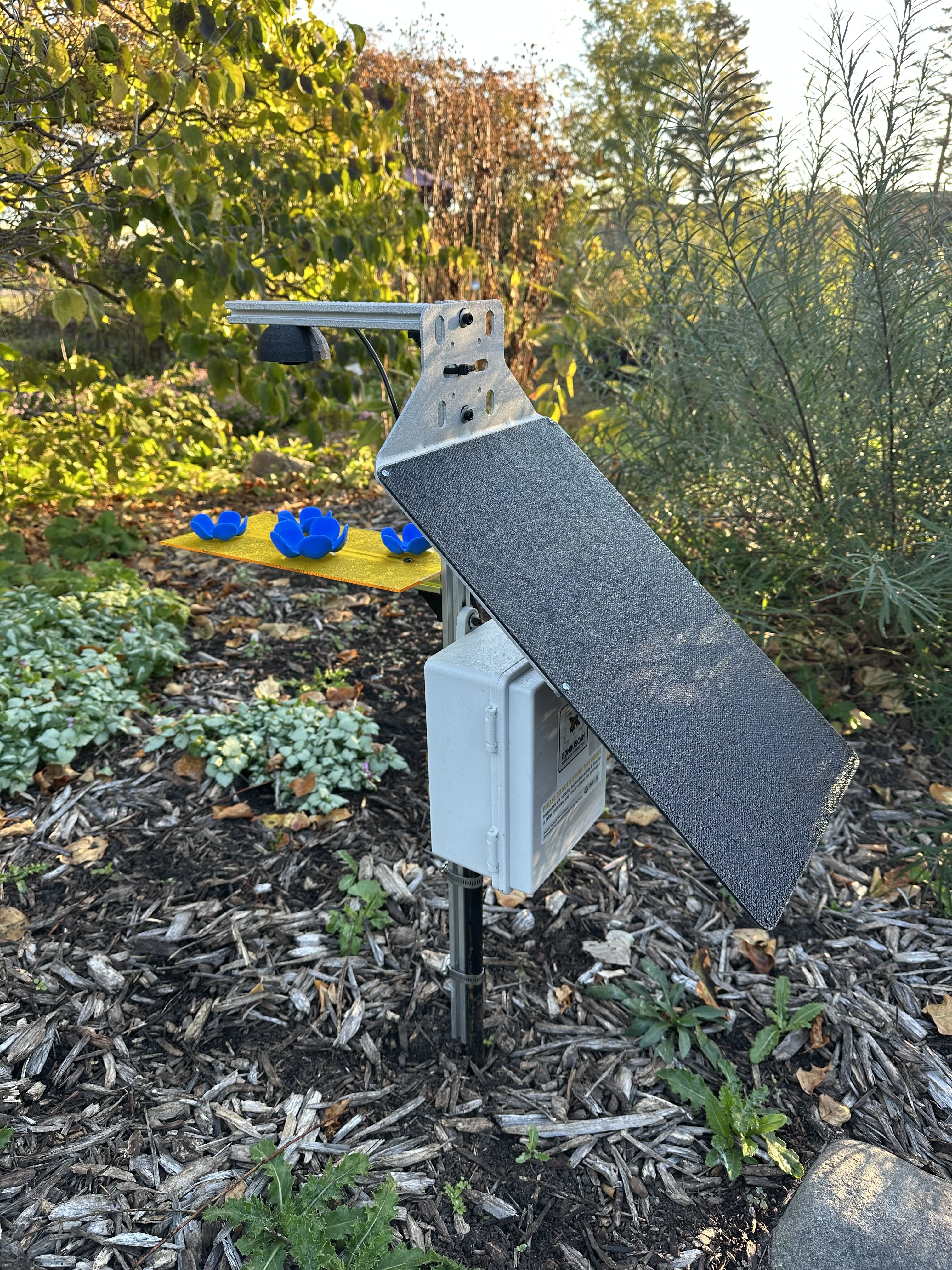
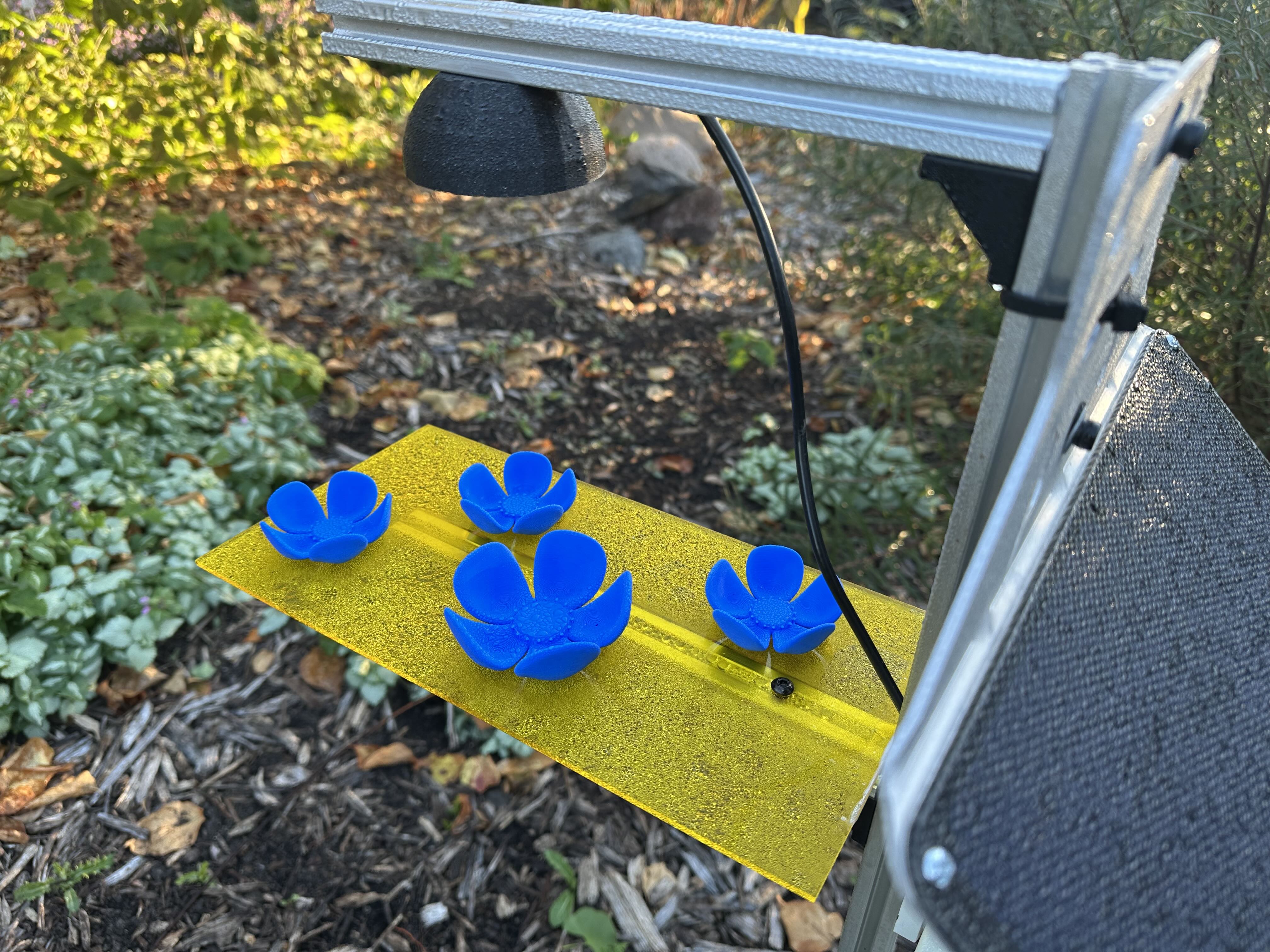
Our camera trap works pretty much like a commercial trail cam would, but with the camera trained on a surface containing fluorescent, artificial flowers that attract bumble bees and other pollinators. When an insect lands, the camera, controlled by a Raspberry Pi miniature computer, detects motion and triggers a 3-image burst.
We gather the images and process them using an insect detection computer vision model. This scans each image and crops out areas where the model believes there is an insect. Those crops are passed on to a classification model.
We then use an amazing tool called BeeMachine developed by Brian Spiesman at Kansas State University. This is a classification model that assigns a taxonomic identity to the insects detected, providing a confidence score (between 0-1) for the top 3 classes. The model is able to ID bumble bees with 94% accuracy and has the capacity to ID almost 1,200 other flower visiting insect groups including 999 bee specices and 154 bee genera (and other groups like wasps, flies, beetles, and butterflies and moths).
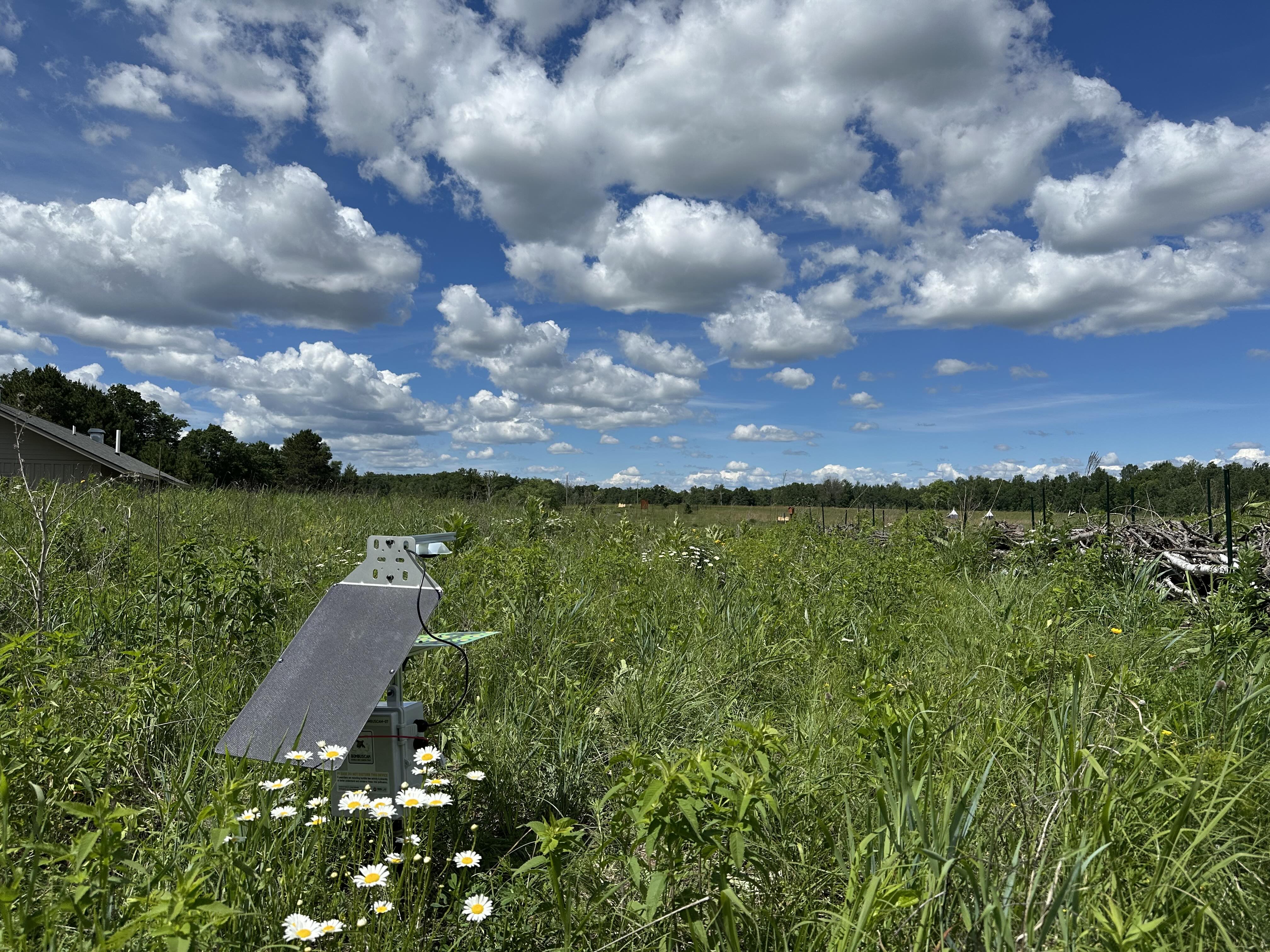
The trap design is formed from an amalgam of prototypes, including work from our lab and some awesome work from researchers at Oregon State University. We’ve made adjustments to the trap attract surface and made ours solar powered to be able to collect data continously for the entire growing season.